Should I do short films?

We are always looking to develop relationships with new film-makers. Everyone has to start somewhere and more often than not short film-makers go on to other projects. At the very least once we get involved it gives us an opportunity to meet and audition actors and that’s never a waste of time for us.

But that’s not to say we jump on board every project that comes our way, and neither should you. It doesn’t matter if it is a student production, privately financed or come out of a lottery funded scheme, here are some questions you should consider:

a) does the script and role appeal to you?  Even if it doesn’t you may still want to consider auditioning just for the practice – but don’t ever let us know that!

b) is it a well organised production? You’ll be able to get a first inkling from the way a script or casting breakdown is written – does it have spelling mistakes, is it properly formatted, does it make sense? If you do decide to proceed further is the audition conducted well – does it run on time or are you kept hanging around, does the director know what he/she is after and is their direction clear? Are the producer and director respectful and polite? If the answer to any of these raises doubts then chalk it up to experience and take it no further.

c) will you get clips? All productions these days will offer to give you a version of the final film, but you should also politely ask if you could get copies of significant takes (including sound) containing your performance that you will solely use for your showreel. With all the will in the world  sometimes short films are not finished, or not finished for a very long time. If you make it clear that you won’t make the material available to the general public then there is no reason why this can’t be granted.

If you do decide to audition then it’s only fair to treat it like any other audition – prepare well, make bold choices, act professionally. Even if you don’t get the role you’ll be meeting new directors, producers and possibly casting directors – make a note of who they are because they might go on to do other projects. It’s networking-by-audition and that’s probably the best kind of networking you can do because they will see you in action.

If you do get the role then again – be professional, treat it like a proper paid job, give yourself wholeheartedly to it. There’s an enormous amount you can gain from it:

– You will develop working relationships with directors, producers and other crew (that runner who has offered to bring you a coffee may one day run a studio). All these people can get you work or recommend you for work.

– You’ll gain more experience on a film set, on the techniques required to act in front of a camera, hitting marks, creating a character and performing in disjointed takes. Even if you’re an old hand at this the practice will do you good.

– You will end up material for a showreel

But perhaps the most important benefit is exposure. Pretty much everyone who makes a short has in the back of their mind an Oscar acceptance speech at the ready, and if that happens then congratulations. But well-made shorts can be seen by a remarkably large number of influential people at countless festivals around the world, from prestigious ones like Cannes or Sundance, to short-only festivals all attended by industry professionals. They can appear on tv or be shown theatrically before features. And they will make up other people’s showreels – directors, director’s of photography, costume designers, set decorators, editors and even composers all have showreels that are watched by other producers and directors all looking for talent for their own productions.

If you are interested in taking part in short films keep an eye on the usual places (Shootingpeople.org, castingcallpro.com etc) or get in touch with local film schools.

Just make sure that film-makers have the passion, dedication and ability to deliver a well-made short film. Who knows – that expenses-only gig might land you the role of a life-time – and how can you put a value on that?

Juno

Here’s a treat for all you line-learners out there – it’s Diablo Cody‘s Oscar winning screenplay for JUNO. Her first screenplay and she knocked it out of the park.

Download the script here.

There are tons of amazing exchanges among the leads and the entire script is worth a read, but if you’re looking for some of those roles that would have been auditioned try these:

GERTA the lawyer – scene 53, scene 58b for the reaction and scene 60 (the beginning and end).

BLEEKER’S MOM – a dowdy lady, scene 46 and 71 for the dialogue and the ‘look’.

ULTRASOUND TECHNICIAN – scene 63 – a lovely scene for any actor

MAC – Juno’s dad, okay maybe not strictly an ‘auditioned for’ role but why not try scene 96.

Good luck with your learning.

How can I keep track of auditions and people I’ve met?

Making notes and keeping records is as important for actors as it is for any other professional in any industry. The contacts we all make and maintain are invaluable and it is through building long term relationships that we maximise our chances of getting work. Like it or not, networking is the lifeblood of the entertainment industry – but you have to know what to do with all that information to make it useful to your career.

As casting directors we keep notes on every director, producer, financier, agent, distributor or other related person or company we come into contact with.

We also keep a detailed database of every actor we’ve ever met – what they have auditioned for, notes on their performance, how well they knew their lines (yes, it’s that important) and any other snippets of information we find interesting. (For those of you not yet on our database rest assured: we rarely build our lists of who to consider for a role solely from our database – ordinarily we start from scratch on every single role – but we will cross reference once we have a shortlist to remind us of who you are and double check if you are appropriate).

So what kind of information does an actor need to keep?

In our view there are two key areas: 1) Contacts and 2) Auditions, and there is a cross over between them. You don’t need to use a complicated database, but you must be meticulous about recording entries. If you do, you’ll build up a really useful picture of who is calling you in on an routine basis (and, perhaps more importantly, who isn’t) what kind of feedback you get, when are you most successful, and ultimately what can you do to improve your chances.

1) Contacts

Perhaps the simplest way to keep tabs on your communications with casting directors, producers, directors or other people that are useful to your career is to create a separate folder on your computer for each category, eg. Casting Directors, Producers, Directors. And then inside each of those folders have a single named document for every person. So in your Casting Director folder you will have a document called “Puro Casting”. At the top of the document – in the Header – you would have the names of personnel, contact details (email addresses, phone numbers) and any other general information that is useful (“Doesn’t like phone calls” or “Email every 6 – 8 weeks” or “Prefers colour headshots” or even, yes it might be true, “Prefers actors not to be off book”).

And then every time you communicate with that person or company, write the date and make a note. Whether you’ve sent an email, attended an audition or workshop, bumped into them at an event – make an entry.

Your document would look something like this:

September 30th 2011: invited to audition for xxx, the role of xxx. Good feedback but was told looked too young for the role.

November 14th 2011: emailed a link to new showreel – no response.

December 4th 2011: saw xxxx at agent’s party, spoke about sail boats.

February 4th 2012: emailed flyer to new play with invitation – nice response but couldn’t make the show.

February 20th 2012: emailed key reviews for play.

Once you start doing this it should become second nature to consult the document before making contact with an industry professional, and you should be able to quickly build up a picture of how the relationship is developing. You’ll find out what each person responds to (or doesn’t), if it’s been a while since you’ve been in touch, if you made them aware of your new headshots or showreels or the great part you just landed. And having all this information to hand is also a great way of showing a new agent that you know what you are doing.

And why make a note about talking about sail boats? At this stage, who knows? But at some point in the future it might become useful.

2) Auditions

Equally important as your contacts are keeping detailed notes on every audition you attend. Again, as you make more and more entries a picture will develop – who is bringing you in most often? What kind of roles are you going up for? Is there consistent feedback and if so how can you take it on board? Are you getting mostly film, tv or theatre auditions?

Again, you don’t need a complex database. You could use a simple spreadsheet or even just a text document but we would suggest you make entries with the following column headings:

Date, Casting Director, Project Name, Role Name – what to put under each of these headings is pretty obvious. But then you’ll also need –

Type of Role – here you would put a short description of the part – “Mid 30s, disgruntled school teacher”

Wore – what you wore to the audition – “Blazer and corduroy trousers”

In the Room – the names of the director and producer if present, or anyone else of interest.

My comments – your own interpretation of how the audition went – “Good audition, learnt lines, asked to do each scene three times, complimented on my accent”

Feedback (this is from the casting director or your agent) – “Good read, too young for role”

Recall/Got the Job? – again, pretty obvious what to put under this column.

Over time you’ll be able to see who is bringing you in and for what kind of roles – do the character ages vary wildly or are they consistent? Is the role type the same? Do you get better feedback depending on what kind of clothes you wear? Are your accents up to scratch?

The answers to these questions will help you focus on what is working and what isn’t, and while it may not make you a better actor it may help you land the next job.

It all sounds like a lot of work, doesn’t it? Well, yes, it is. But it is another way for you to take control of your career, to treat it like a profession, to help you run your own business.

And it gets easier the more you do it. So why not start now?

Gary Cole

Chances are you won’t be able to picture this actor simply from his name, but he’s one of those fantastic versatile American actors that never stops working and is a treat in anything he appears in. So today we’re going to highlight the amazing Gary Cole.

Yes, he looks like the guy next door, someone you could share a beer with, a harmless middle of the road kind of guy. But don’t let that fool you – he’s played a S.W.A.T. commander (WANTED) and a drug lord (PINEAPPLE EXPRESS). He’s played astronauts and sheriffs and lawyers and doctors. He was Vice President Bob Russell in THE WEST WING and Ari Gold’s old best friend Andrew Klein in ENTOURAGE. He even played General Custer in the acclaimed tv movie SON OF THE MORNING STAR.

And might he have inspired Ricky Gervais’ David Brent with his role as office supervisor Bill Lumberg in the little seen but much loved film OFFICE SPACE?

Despite playing the lead in a few successful American tv shows in the late 80s and 90s (MIDNIGHT CALLER, AMERICAN GOTHIC) he’s never really made the leap to movie stardom, but that hasn’t stopped him from just working and working – single episodes here, some voice work there, and an occasional supporting movie role.

What a great career – and it feels like his best is yet to come.

How to prepare for a role and receive an Oscar nomination

Ahh, don’t we all wish there was a simple “How To” guide to achieve this?

Instead you’ll have to make do with this interesting article from the New York Times about how some of this year’s Oscar nominated actresses prepared for their roles – click here to read it.

Two things we find fascinating from the article are 1) that it took Rooney Mara months and months of recalls and testing before they offered her the role – there are no easy rides, and 2) it took the movie Albert Nobbs 15 years to get made. That’s a long time even by independent film standards and shows an incredible amount of dedication from someone who you could forgive for resting on her laurels and taking it easy – the co-writer, producer and star Glenn Close.

It’s that kind of belief that should inspire all of us to try harder and never be complacent… and if we end up with an Oscar nomination well that’s nice too.


Should I have a showreel? and other related questions…

Yes please!

It is as important as a good headshot. If we haven’t met you before it is usually the deciding factor on whether we invite you to an audition. It gives us a good sense of who you are – what you look like, sound like, the way you move, your physicality.

Our audition slots are precious and we want them to be filled by actors who have a chance of getting the role. We don’t want to waste anyone’s time – yours, ours and certainly not the directors and producers we work with. But at the same time we like to discover new actors rather than simply bringing in the same faces.

When filling our audition slots we are far more likely to call you in if we have been able to see a snippet of your work as opposed to somebody who just has a headshot.

So what do we like to see in a showreel?

Firstly, it should be short – no more than 3 minutes. And if we’re honest we don’t usually watch all the way to the end. We rarely cast simply from a showreel – we use it as a tool to decide whether to bring you in – so usually after a minute or two we’ve made our decision.

We like an opening montage – some casting directors don’t – but we do (although they are not, of course, compulsory). A quick trailer showing your versatility, a few different looks. And the choice of music interests us too – it gives us a slight insight into your tastes. This montage should last about 30 seconds or so.

And then if you have them three of four good sequences, tightly edited to show us your performance. It doesn’t have to be the entire scene either – we are less interested in narrative, more interested in seeing what you can do. Each sequence should be about 30 or 40 seconds long.

Choose contrasting clips – we like to see variety and versatility, depth and range.

Resist the temptation to include work where you are not featured prominently – make sure you choose scenes where we can see your face. So avoid those long shots where we have difficulty picking you out. Close ups or medium close ups work best.

If in doubt about a clip – don’t use it!

What if you haven’t got anything worthwhile to put on a showreel?

We’re more than happy to watch a simple video introduction straight to camera. It doesn’t need to be gimmicky – just who you are, what you are about. Just to give us a sense of you. Everyone has to start somewhere.

There are a whole host of companies that will now film a showreel for you from scratch. If you decide to go this route choose carefully! Research what they do, watch as many showreels they have produced as you can, check for hidden extras.

Try to pick material from lesser known productions – there’s something off-putting about seeing re-enacted scenes that just don’t have the production value or star power of the original.

FINALLY….

We watch all our showreels online – YouTube, Vimeo, Spotlight – it doesn’t really matter, but we no longer watch DVDs…


Deep Impact

Do you want to help save the world? Well then learning some lines from this near perfect disaster movie is the order of the day. It’s a sweeping ensemble epic directed by Mimi Leder, with whom we had the pleasure of working with on another Morgan Freeman film THICK AS THIEVES.

With an asteroid hurtling through space on a collision course with earth, it is a wonderful opportunity for actors to show their terrified acting ability.

[amazonshowcase_935c13f0f68d1dc5dd76b4a5326f7b4c]

Download the script by clicking here.

Here are some roles that would have been cast through the audition process. Be warned – they are not easy roles to audition. If you are not learning lines for any real auditions in the next few days, then use these to keep your brain nimble.

BOBBY –  scene 21,  scene 258 –  a tricky one, no dialogue but the reaction when pulling the long straw is important.

ENTREKIN – scene 38, and the little bit in scene 46.

PATRICIA RUIZ – scene 25A. A whole scene dedicated just to her.

CHLOE – scene 40a, the young new wife meeting her step-daughter – who is more or less her age – for the first time.

VAN SERTMA – for those of you who like to deliver scientific lines – scene 136 and scene 189f.

SECTION LEADER – a for militaristic delivery – scene 219 and 220.

ELLEN BIEDERMAN – mother of Elijah Wood’s character – not many lines but an emotional performance needed – try the short but critical scene 118, and then scene 220

VICKY – very similar to ELLEN’s role – not a huge role but essential to get it pitch perfect – try scenes 217,  276 and then 279…

MARIETTE – and again, another role with just a few filming days, not many lines, but critical for the emotional climax of the entire film – we see her in scene 72a and then the sequence including scenes 306 / 309 / 310 / 311.

There are some other wonderful sections of dialogue in there too – from the monologues of Morgan Freeman‘s President to the beautiful mother/daughter relationship between Vanessa Redgrave and Tea Leoni…. so if you don’t fancy tackling any of the smaller roles above then treat yourselves to one of the meaty parts.


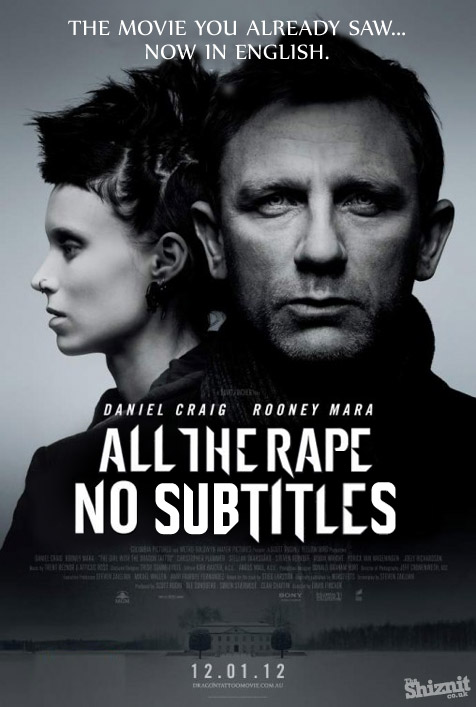
If Oscar nominated film posters told the truth…

The Help
Nominated for: Best Picture, Best Actress (Viola Davis), Best Supporting Actress (Octavia Spencer and Jessica Chastain)

The Descendants
Nominated for: Best Picture, Best Director (Alexander Payne), Best Actor (George Clooney), Adapted Screenplay

The Girl With The Dragon Tattoo
Nominated for: Best Actress (Rooney Mara)

The Artist
Nominated for: Best Picture, Best Director (Michel Hazanavicius), Best Actor (Jean Dujardin), Best Supporting Actress (Berenice Bejo), Original Screenplay

The Iron Lady
Nominated for: Best Actress (Meryl Streep)

War Horse
Nominated for: Best Picture

Beginners
Nominated for: Best Supporting Actor (Christopher Plummer)

The Tree Of Life
Nominated for: Best Picture, Best Director (Terrence Malick)

Moneyball
Nominated for: Best Picture, Best Actor (Brad Pitt), Best Supporting Actor (Jonah Hill), Adapted Screenplay

Tinker, Tailor, Soldier, Spy
Nominated for: Best Actor (Gary Oldman), Adapted Screenplay

The Ides Of March
Nominated for: Adapted Screenplay

And although these following aren’t Oscar nominated, they can be called ‘honourable mentions’….

Shame


We Need To Talk About Kevin


A Dangerous Method


J. Edgar


Thanks to theshiznit.co.uk for mocking these up!


Reader needed on Tuesday January 31st 2012

We need a female reader, preferably with a good Australian accent, to read in at a feature film audition on Tuesday January 31st – 2pm to 5pm in central London. If you are available / interested please Leave A Reply or send us an email. A link to your Spotlight page or resume is useful.

We usually receive lots of responses so can’t reply to everyone individually so we thank you now for volunteering.